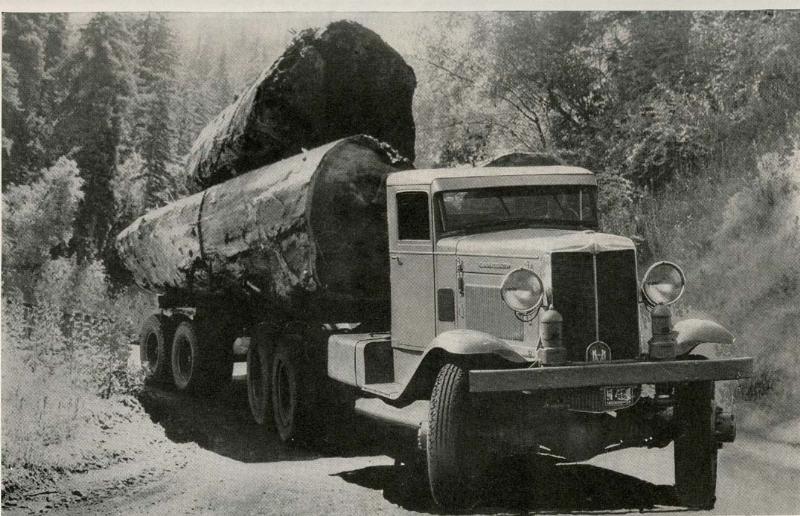
 lumberjack truck boshure
|
 brochure Marmon-Herrington 6x6 truck
|
 Новые грузовики у стен завода «Мармон-Херрингтон» в Индианаполисе (около 1933 г.). Эти 2,5-тонные автомобили TL29-6 66 были предназначены прежде всего для использования в качестве артиллерийских тягачей
|
 M-H truck 6x6 1933
|
 Marmon-Herrington truck
|
 Nairn Bros trailer coach
|
 Prototype TH320-6 under test at Indianapolis Motor Speedway prior to being shipped to Iraq in 1932
|
 MH at work in Iraq. Армейские грузовики Marmon-Herrington сильно походили на грузовые автомобили других фирм - Corbitt 168 FD8 и Internatiol M-5H-6
|


Компания Мармон-Херрингтон была основана в 1931 году, 13 марта.
В 1930 г., покинув военную службу, Артур Херрингтон (Arthur Herrington) (в 1923–25 гг., служа в Квартирмейстерском корпусе сухопутных сил США (Quartermaster Corps), сокращенно QMC (Кью-Эм-Си), Артур Херрингтон участвовал в разработке легких грузовиков TTL 4x4 на 40-сильном шасси Liberty, для них Херрингтон разработал системы привода ведущих и управляемых колёс с неразрезным мостом с шариковыми шарнирами равных угловых скоростей Rzeppa) начал сотрудничество с Уолтером Мармоном (Walter Marmon), братом известного изобретателя Говарда Мармона (Howard Marmon), выпускавшего легковые автомобили высшего класса. К тому времени его фирма в Индианаполисе оказалась на грани банкротства, и в марте 1931 г. на ее базе была образована компания "Мармон-Херрингтон" с главной конторой в НьюЙорке.
В 1931 г. фирма получила заказ от ВВС США на 33 аэродромных топливозаправщика "33Т1" (4x4), которые от стандартизованных грузовиков "Кью-Эм-Си" группы 2 отличались только мостами. В 1933 г. начался выпуск семейства ТН (4x4/6x6) грузоподъемностью 1,5–7,5 т с мотором "Геркулес RXC" (Hercules). Из них в армии использовали прежде всего 3-тонные грузовики ТН310-6 (6x6), применявшиеся как эвакуаторы ТН315-6 и полевые мастерские. В 1934–35 гг. компания "Мармон-Херрингтон" поставила в Персию партию многоцелевых шасси ТН300-4 (4x4) и построенных на их базе штабных машин и пулеметных бронеавтомобилей ТН310-ALF.
За основу новых машин, выпускавшихся лишь в течение первых 5–6 лет, Херрингтон принял конструкции, созданные в Квартирмейстерском корпусе.
В ноябре 1933 года Мармон-Херрингтон представила автомобиль нового поколения «А» с двигателем «Геркулес», КПП «Фуллер» (Fuller) (4 или 5 ступеней), ведущими мостами «Тимкен». У машины спереди устанавливалась защитная решётка радиатора, использовалась открытая кабина с тентом и два запасных колеса по обеим сторонам кабины. В дальнейшем выпускались грузовики серии А10-4 (4х4) (полторы тонны), артиллерийские бортовые тягачи (три тонны) и эвакуаторы типа А30-6 (6х6) . Кроме грузовиков, были разработаны бронеавтомобили на базе своих шасси, как полноприводные, так и заднеприводные.

Одним из последних собственных комплектных автомобилей в 1937 г. была 6-тонная ремонтно-эвакуационная машина TL31-6 (6x6) с краном "Гар Вуд" (Gar Wood) .


В 1934 г. фирма изготовила опытные образцы заднемоторных бронеавтомобилей Т11 (4x4) со 115-сильным мотором "Геркулес", коробкой передач с 6 ступенями переднего и тремя заднего хода и пулеметной башней с полусферическим куполом. Второй вариант Т11Е1 отличался деталями корпуса, третий Т11Е2 получил новую башню с двумя пулеметами калибра 7,62 и 12,7 мм и еще одним пулеметом в задней стенке. Таких бронемашин построили 6 экземпляров.
Непомерные расходы на разработку новых автомобилей привели к резкой переориентации фирмы на изготовление полноприводных вариантов стандартных автомобилей крупных американских компаний. Ее главным партнером стал концерн "Форд" (Ford), а созданные совместно с ним многочисленные машины имели марку "Форд-Мармон-Херрингтон" и особую индексацию Херрингтона.
Собиравшиеся в период 1937–38 гг. 3-тонные грузовики-тягачи В5-6 и С5-6 (6x6) представляли собой обычные 1,5-тонные шасси 4x4, дополненные двумя ведущими мостами — передним и задним. В единичных экземплярах аналогичные машины предлагались на шасси "Додж" (Dodge), "Интернэшнл" (International) и "Корбитт" (Corbitt).
В 1935 г. на 1-тонном шасси "Форд" с мотором V8 (85 л.с.) построили полубронированные разведывательные машины "Скаут Кар A7SC4" (Scout Car) с открытым верхом.
В 1936 г. Херрингтон завершил работу над легким гусеничным движителем с передней ведущей звездочкой, 4 опорными катками и резинометаллической лентой шинной компании "Гудрич" (Goodrich). Впервые его установили вместо задних колес на 1,5-тонном грузовике "Форд V8-79" (4x4). Он прошел испытания, получил статус легкого полугусеничного тягача Т9 для буксировки 75-мм пушек и выпускался короткое время. Такой же движитель был смонтирован и на стандартном грузовике "Отокар" (Autocar), а через год появился вариант Т9Е1 с движителем от легкого танка. Во время сравнительных испытаний с прототипами полугусеничных бронетранспортеров с движителями Джеймса Каннингхэма (James Cunningham - James Cunningham, Son & Co.) конструкция Херрингтона оказалась хрупкой и недолговечной. В последний раз ее использовали в 1940 г. на опытном бронеавтомобиле DHT5 с 37-мм пушкой. К 1939 г. программа компании "Мармон-Херрингтон" насчитывала 66 моделей, но с началом Второй мировой войны, когда полноприводные машины стали выпускать многие американские фирмы, спрос на ее продукцию резко сократился.

Это заставило Херрингтона взяться за создание новых, ранее не свойственных ему видов техники, из которых признание получил лишь прототип легкого плавающего автомобиля — прообраз известной амфибии "Форд GPA". После вступления США в войну фирма выпускала ведущие мосты, эвакуаторы и передвижные лебедки для аэростатов, собирала танки Т22 "Локаст" (Locust), а в 1944–45 гг. построила 3,2 тыс. седельных тягачей "Интернэшнл" серии Н-542. Между тем в разгар войны эпицентр создания новых бронемашин марки "МармонХеррингтон" переместился из США в другие страны, остро нуждавшиеся в собственной технике. Самые оригинальные разработки появились в Южной Африке, где их изготовлял местный сборочный завод "Форд". В начале 40-х гг. на 1,5-тонном шасси там серийно выпускались капотные бронеавтомобили Mk-II, Mk-III и Mk-IV (4x4), но наиболее примечательным был вариант Mk-VI (8x8) с двумя моторами "Форд" V8 и двумя трансмиссиями, пулеметными или пушечными башнями. Австралийский завод "Форд" выпускал тягачи и бронеавтомобили на шасси 4x4 и 6x6, переоборудованные по проекту Херрингтона.

В послевоенное время в положении компании "МармонХеррингтон" мало что изменилось. К этому времени серийное производство полноприводных военных автомобилей освоили многие фирмы разных стран, а переделка стандартных машин в полноприводные уже не требовалась в больших объемах. Одними из немногих военных автомобилей, создававшихся при участии Херрингтона, были 3-тонные грузовики F6 (4x4), собиравшиеся в 1948–50 гг. на заводе "Форд" в Бельгии. Главным достижением 50-х гг. была разработка полноприводных шасси для аэродромных пожарных автомобилей с надстройками разных изготовителей. Машины серий 0-10 и 0-11 (6x6), выпускавшиеся в 1950–54 гг. фирмой "Америкэн ЛаФранс" (American LaFrance) для ВВС США, оснащались двигателями мощностью от 240 до 310 л.с., весили 20 т и развивали скорость 96 км/ч. В 1956–58 г. компания "Мармон-Херрингтон" самостоятельно собирала уникальные для своего времени пожарные автомобили 0-12 (8x8) с 810-сильным двигателем "Континентал" (Continental) V12 воздушного охлаждения и автоматической 3-ступенчатой коробкой передач. Для привода водяного насоса с подачей 4750 л/мин служил собственный 500-сильный оппозитный мотор, расположенный в заднем отсеке кузова. Машина длиной около 11 м и полной массой 31 т могла доставлять к месту пожара 8,4 тыс. л воды.

Одновременно фирма изготовляла спецшасси для аэродромного оборудования, а также продолжала переоборудовать автомобили "Форд", создав в 1956 г. на шасси F750 (4x4) армейский грузовик, получивший военный индекс М754. К этому времени она отметила выпуск 100-тысячного переоснащенного "Форда". На следующий год, после 14 лет разработки, был продемонстрирован опытный образец плавающего вездехода "Рино" (Rhino) 4x4 — "Носорог" с полусферическими колесами, так и не получивший никакого развития. С образованием в 1963 г. компании "Мармон" по выпуску коммерческих грузовиков, переехавшей на новый завод в Дентоне, прежнее предприятие в Индианаполисе пришлось закрыть. В 1973 г. фирма "Мармон-Херрингтон" возродилась в Ноксвилле, но военных машин уже не выпускала. Она существует до сего дня и по-прежнему занимается переоборудованием автомобилей.

When the US Army Quartermaster Corps began developing its so-called ‘Standard Fleet’ around 1928, the 60 or so vehicles included were broken into five groups numbered I to 5, each roughly corresponding to a weight class.
Among the new designs in group I, the lightest weight class, there were two 2.5 -ton 6x6 vehicles. When they were subsequently rolled out of the shops of the Hoiabird Quartermaster’s Depot in 1932, one, W3228, was powered by a Duesenberg J engine, while the other, W3229, was powered by a Lycoming. In time, a Franklin air-cooled V12 was also trialled in one of the vehicles.
It is worth noting that during this time, a certain AW Herrington was employed by the Motor Transport Division of the Quartermaster Corps. While the Standard Fleet did not enter mass production, the vehicles created were instrumental in defining future generations of US Army tactical vehicles. The Standard Fleet had been created with the purpose of crafting vehicles built to wholly military specifications using standardised components, as opposed to the previous process of buying commercial vehicles from a variety of manufacturers – vehicles that might have closely fitted military needs, but were rarely exactly what the US Army wanted. Ultimately however, Congress and the Comptroller General of the United States decreed that the Army could not produce its own vehicles as it had with the Standard Fleet, but rather had to rely on private enterprise for its future needs.
Although those with dual rear wheels faired better, the off-road shortcomings of two-axle vehicles, even 4x4s, were obvious. Accordingly, consideration was given to 6x6 trucks, and in 1933 the Army procured a commercial 2.5-ton 6x6. Designated the TL29-6, this truck was manufactured by the Indianapolis-based Marmon-Herrington Company, which had AW Herrington, no longer in the service of the Army, as one of its principals.
The TL29-6 was not without competition, as Corbitt offered the Army its 168-FD8.
While neither design was an outright failure, neither offered the Army what it wanted at the price it wanted to pay. At this point in time, powered front axles were still in their infancy, and vehicles so equipped were limited-production, expensive, specialist machines. However, the concept had piqued the interest of the GMC Division of automotive titan General Motors.
GMC had its origins in the Rapid Motor Vehicle Company and the Reliance Motor Company, both Detroit-based independent truck manufacturers. W C Durant, who began assembling the corporate behemoth that would become General Motors, purchased Reliance in 1908, and followed that with the purchase of Rapid in 1909. Reliance and Rapid combined to form the General Motors Truck Company, and the GMC logo first appeared in 1911.
In Chicago, an empire was also being built by John D Hertz – later of rental car fame – who owned Yellow Cab. In November 1922 he purchased the Lake Shore Motor Bus Company, which included the American Motor Bus Manufacturing Company. The initial function of the firm was to provide buses for the Chicago Motor Bus Company, also controlled by Hertz, but it was soon selling motor coaches to other operators.
On 17 April 1923, the American Motor Bus Manufacturing Company was sold to the Yellow Cab Manufacturing Company, which promptly reorganised as the Yellow Coach Manufacturing Company.
The business prospered, with well over 2000 units being delivered between August 1923 and July 1925, about half going to Hertz-controlled firms. The company’s success was noted by Alfred P Sloan, chairman of General Motors, and, on 8 July 1925, a merger of General Motors with Yellow Coach Manufacturing was announced. General Motors would get 60% of the new holding company, Yellow Truck and Coach Company, in exchange for the assets of General Motors Truck Company (GMC) and the obscure GM subsidiary of Northway Motor and Manufacturing Company.
On 26 August 1925, the deal was consummated and, in March 1927, the new firm acquired a 160-acre tract of land near Pontiac, Michigan, for the construction of a new assembly plant.
Trucks began leaving the assembly line on 5 January 1928. With 26 acres under cover, it was at the time the world’s largest truck plant.
It was from this formidable position that General Motors entered into the US Army 6x6 fray in response to a 1937 invitation to bid. Its purpose-built model 4929 was a stylish 1.5-ton truck featuring an Oldsmobile 230 engine mated to a Chevrolet four-speed transmission, powering Timken axles through a Wisconsin T32 transfer case. The front-end sheet metal was Chevrolet pattern, and the truck chassis was a modified Yellow commercial unit. Utilising such readily available components both lowered unit cost and speeded up production. In total, 229 were built against contract 398-QM-6270 valued at $539,534, and the last was delivered on the final day of May 1938.
Also in 1938, GMC’s efforts to develop an engine for use in commercial vehicles bore fruit when its 4067cc six-cylinder design emerged. This engine would play an important role in GMC’s future military contracts, as would the model 4929 truck. However, the engine’s first military application was to power the 21/2-ton 6x6 model 4937, only 11 of which were built – 10 for the US Marine Corps and one for export. With the exception of the engine, the rest of the powertrain was shared with the model 4929.
In 1939 the US Army issued solicitation to bid number 398-40-2601939 and the die was cast for the truck that would ultimately become the ubiquitous CCKW. The specification called for a cross-country payload of 5000 lb (2273kg), required a top speed of 45mph (72km/h) and demanded the ability to climb a 1:30 gradient in direct drive.
Studebaker and Mack responded to the solicitation, as did Yellow Truck and Coach, the latter designating its new design the model ACKWX-353 (A = 1939 model year; C = conventional cab; K = selective front-wheel drive; W = driven tandem axles; X = non-standard (Timken) driveline; 353 = chassis code). Bids were opened on 18 May 1939, and the contract awarded to GM on 15 June of the same year.
The company delivered 32 of the new trucks on 4 January 1940, with one more four days later, all powered by the same 4067cc engine as the model 4929 and 4937. Thereafter, the ACKWX-353 was powered by a 4198cc version of the same engine.
While the GMC parts book indicates that the serial number range for these vehicles was ACKWX353-3604 through ACKWX353-6070, totaling 2466 vehicles, GM’s records show that 2469 were built under contract for the US government (this includes the 33 trucks powered by the 4067cc engine). Fifty of the trucks, all powered by the larger capacity engine, were equipped with winches. A further single unit was built for GM’s demonstration purposes, and a single right-hand drive version with the 4067cc engine was built for the French, with another possibly for Switzerland. By far the largest overseas order was for 1000 trucks with the 4198cc engine, which went to Great Britain in 1941 on sales order 10000-999.
While it has been reported that some overseas customers felt that the 4198cc powerplant was too much engine for the truck, the feeling Stateside was that the vehicle needed more reserve power. GM therefore responded by beefing up the engine to a more formidable 4428cc. Not content to merely increase the stroke, GM also improved bearings and cylinder head cooling at the same time.
Incredibly, the first engine was run less than a month after the concept was floated on 18 July 1940, and the foundation was laid upon which to build the next generation of military 6x6s, the CCKWX.